

HR · sales · managers · beginners
Microexpression training for people who work with people
Learn to see the seven universal expressions when they cross a face for a fraction of a second, to know what a flash can and cannot tell you, and to ask the question that finds out the rest. Online, self-paced or with a live cohort.
As featured in

























What a microexpression tells you
A microexpression is a full expression of emotion that crosses the face in a fraction of a second, before the person puts their composed face back. You ask about the restructure and a candidate's nose wrinkles and her upper lip lifts, then she says she is comfortable with change. That flash is real information. It tells you a feeling was there.
People say a microexpression catches a liar. It shows an emotion and nothing about its cause: she may dislike restructures, or the question, or the memory of the last one. Honest people flash fear and anger when they feel doubted. So the training has two halves. First you learn to see the expression. Then you learn to check it against how the person normally looks and what was just said, and to ask about it.
The seven expressions you learn to see
Paul Ekman's research describes seven facial expressions of emotion that look the same across cultures. Each is listed here as a camera would record it.
- 01
Anger
Brows pulled down and together, eyelids tightened, lips pressed or squared.
- 02
Contempt
One lip corner tightened and lifted. It is the only one of the seven on one side of the face.
- 03
Disgust
Nose wrinkled and upper lip raised.
- 04
Fear
Brows raised and drawn together, upper eyelids lifted, lips stretched back towards the ears.
- 05
Happiness
Lip corners up, cheeks lifted, and the skin at the outer corners of the eyes creased.
- 06
Sadness
Inner corners of the brows raised, lip corners pulled down.
- 07
Surprise
Brows raised and curved, eyes widened, jaw dropped open.
Who it is for
Beginners
Start by describing what a face did before you name a feeling. No earlier training needed.
HR and interviewers
Tell interview nerves apart from a real concern, and keep a facial flash out of the hiring score.
Sales and negotiators
Catch the reaction when the price lands, and ask about it while the buyer is still in the room.
Managers
See the disagreement nobody voiced in the meeting, and raise it without putting anyone on the spot.
The lessons
Where microexpressions are taught
Microexpressions are taught inside two courses, as part of reading the whole person. The lessons use workplace scenarios, photo exercises and branching conversations, and each one cites its source by book and page.
For beginners
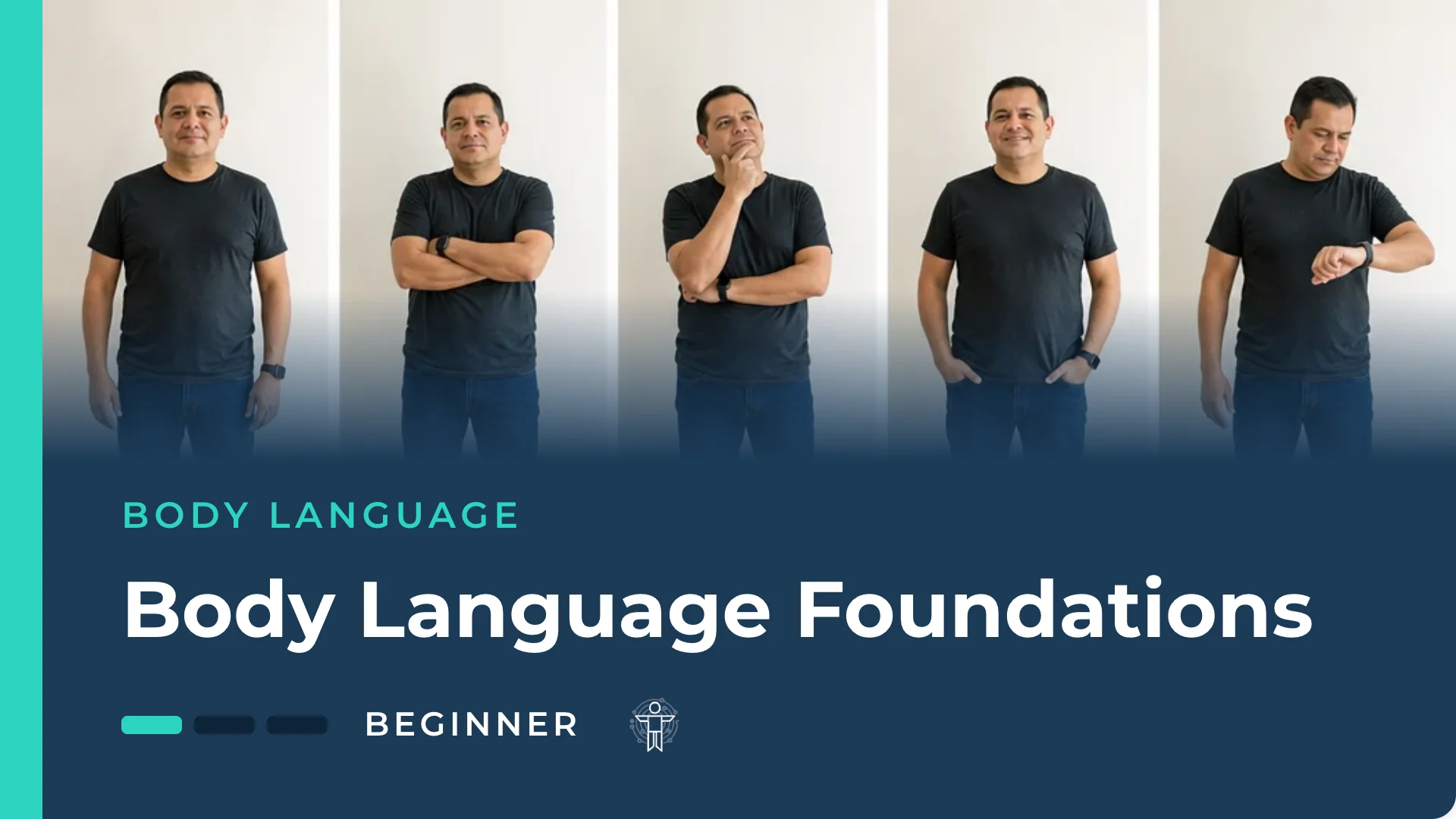
Body Language Foundations: Read Non-Verbal Communication with Evidence and Judgement
38 lessons · 2.5 hours · 7 CPD points
Module: Read the Face and Eyes with Humility
- The Eyebrow Flash, Furrow, Jaw Shift, Tongue Jut, and Nostril Flare
- Eye Blocking After the Renewal Question
- Recognise Micro-Expression Limits
- The Deadline Question and the Furrow
For HR and interviewers
HR Non-Verbal Intelligence: From Baseline to Confident, Ethical Assessment
53 lessons · 4 hours · 9 CPD points
Module: Navigate the AI-Era Interview
- Micro-expressions in a video interview
- The jaw shift on a video interview
- The gaze break and facial flash in a video interview
- The Flash Before “Yes”
Formats and prices
Every price is published, and it is the same for every course.
Self-paced course
€99 per person
The full course at your own speed, with the exercises, the module tests and the certificate.
Live cohort
€449 per person
The self-paced lessons plus live online sessions with Sean.
Private team cohort
€449 per seat · minimum 5
A cohort run privately for your HR, sales or management team, with a manager dashboard.
Your instructor
Taught by Sean Johns
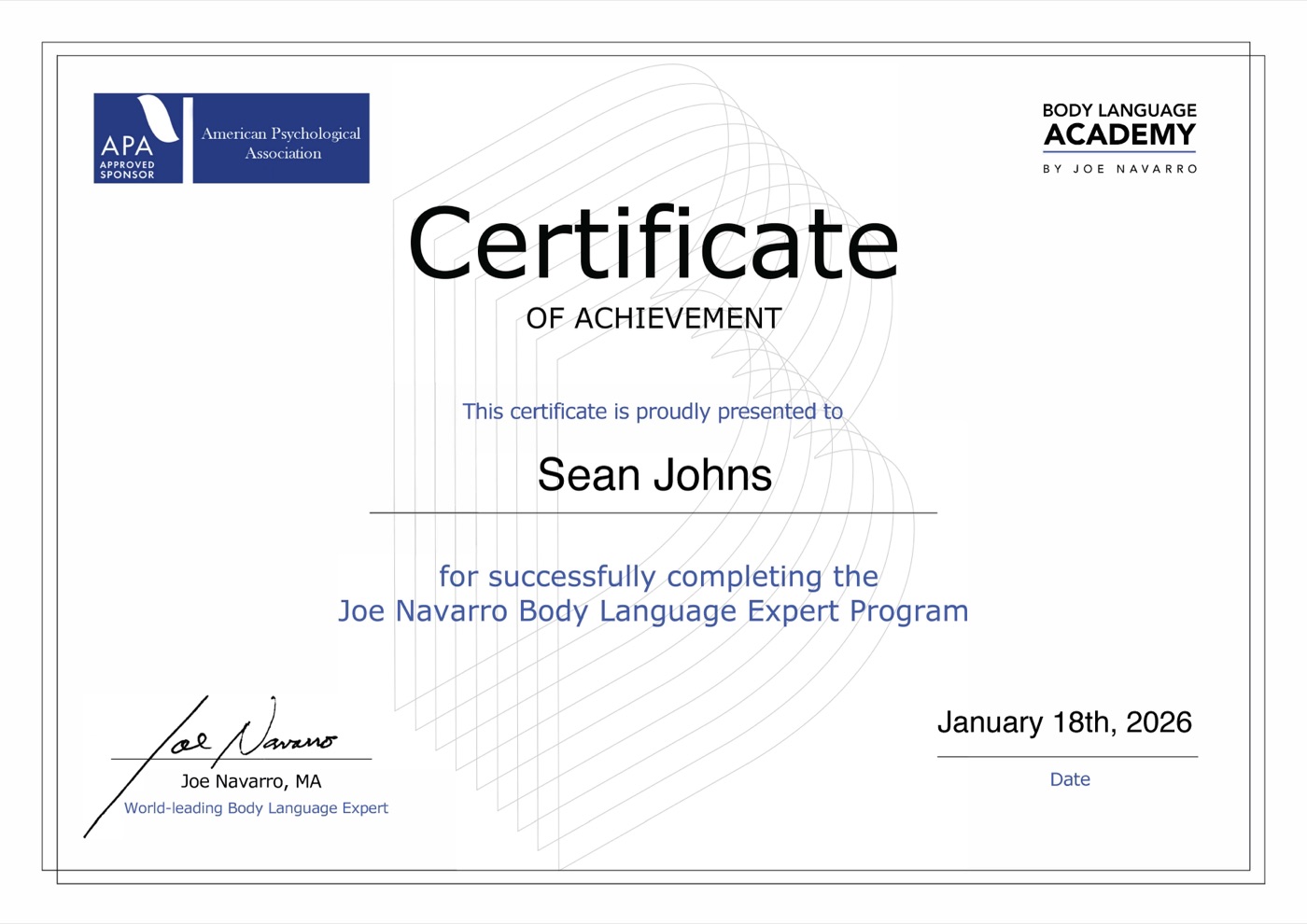
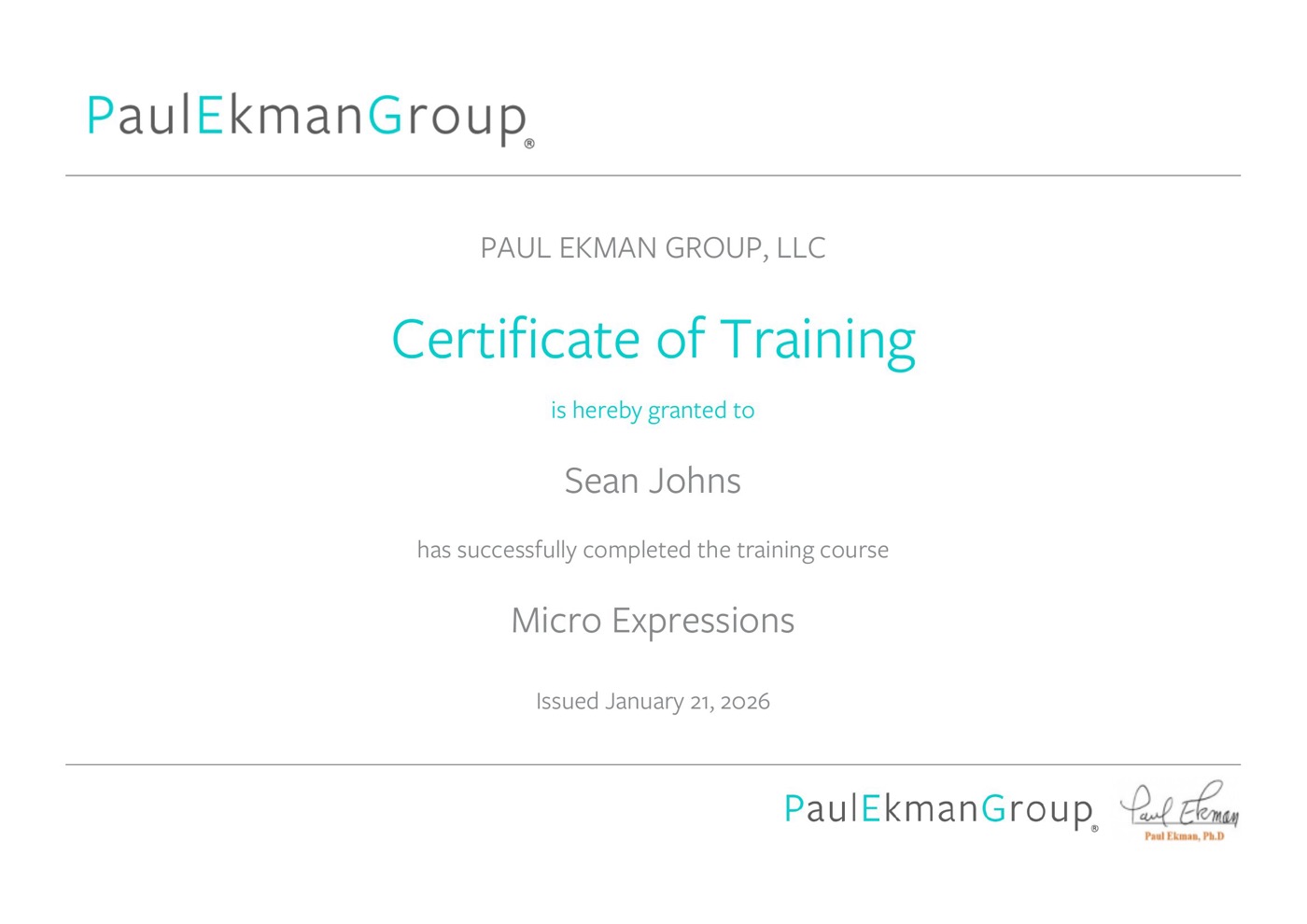
Sean Johns leads the live cohort sessions. His certificates are published on the About page with their issuer and date.
Joe Navarro Body Language Expert Program
Body Language Academy by Joe Navarro · January 2026 · certificate
Micro Expressions (Certificate of Training)
Paul Ekman Group, LLC · January 2026 · certificate
Read about microexpressions first
Free guides from the blog: the seven expressions with pictures, and how they show up in sales and at a hotel front desk.
- The 7 Universal Microexpressions: What Each One Looks Like and What to Do Next
Each entry covers the look on the face, what it can and cannot indicate, and what to do the moment you notice it, built on Ekman's cross-cultural work.
- Micro Expressions: What You See, What It Means, What to Do
Each of the seven flashes a real emotion for a fraction of a second, never a lie. See the facial cue for each and what to do in the moment you catch one.
- Micro-Expressions: The 7 Universal Emotions Your Face Reveals
Learn to recognise all 7 universal micro-expressions (fear, disgust, anger, happiness, surprise, sadness and contempt) in flashes as brief as 1/25 of a second.
- Sales Micro-Expressions: 5 Signals That Hint at What Buyers Think
Sales micro-expressions: five brief facial cues that hint at what buyers think, and the question to ask when you spot each one in a sales conversation.
- The First 90 Seconds: Microexpressions That Shape Every Hotel Guest's Stay
Train front-desk teams to read guest microexpressions in the first 90 seconds of check-in and sort out problems before they become bad reviews.
Questions people ask before they choose a course
What is a microexpression?
A microexpression is a full facial expression of emotion that appears for a fraction of a second before the person gets their face back under control. Paul Ekman's research describes seven expressions seen across cultures: anger, contempt, disgust, fear, happiness, sadness and surprise. Seeing one tells you an emotion was there. You still have to find out what it was about.
Can microexpressions tell you when someone is lying?
No. A microexpression shows a feeling the person is trying to control, and honest people do that all the time: a nervous candidate, a buyer who dislikes the price, a colleague who feels accused. In Bond and DePaulo's 2006 review of 206 studies, people judging lies from behaviour were right 54% of the time against 50% by chance, and professionals did no better than anyone else. The training teaches you to treat a flash as a cue to ask a better question.
How do I choose a credible microexpression course with expert instruction?
Check four things. The course names its sources, so you can read the research yourself. It tells you what the skill cannot do. You practise on realistic situations and learn why each answer was right or wrong. And the instructor's own certificates are published where you can inspect them. BodyLytics lessons cite Ekman and Navarro by book and page, and Sean Johns's certificates are on the About page with issuer and date.
Which online microexpression course is suitable for beginners?
Start with Body Language Foundations. Its face and eyes module teaches you to describe a facial movement precisely before you name an emotion, then covers microexpressions and their limits. It assumes no earlier training, is self-paced, and costs €99.
What microexpression training is useful for HR professionals and interviewers?
The HR Non-Verbal Intelligence course. It covers reading a candidate against their own baseline, telling interview stress apart from deception, and a module on video interviews that deals with facial flashes on camera and with the scores automated tools attach to them. You learn to answer a flash with a follow-up question and to keep it out of the hiring score.
Is microexpression training useful for sales and everyday workplace conversations?
Yes, wherever a quick reaction matters: a buyer's face when the price lands, a stakeholder's when the deadline moves. The skill is to notice the flash, check it against how the person normally looks and what was just said, and then ask about it in plain words, such as "What concern does that figure raise for you?"
Is microexpression training ethical and evidence-based?
Yes, when it is used to understand people and treat them fairly. BodyLytics teaches you to notice changes from how a person normally behaves. It never asks you to judge someone's character, honesty or suitability from their face, and the HR course says plainly where face-reading claims go beyond the evidence, including automated video-interview scoring. Every lesson cites its source.
How is this different from the Paul Ekman Group's training tools?
The Paul Ekman Group's tools train one skill: recognising the seven expressions at speed on photographs of faces. Sean Johns completed that training and holds its certificate. BodyLytics courses teach the same expressions in work situations, such as an interview, a negotiation or a board meeting. They cover posture, hands, voice and context too, and what to say next.
Do I get a certificate?
Yes. Each course ends with a BodyLytics certificate carrying a credential number that can be checked on our verify page. The courses are CPD certified through Open CPD, registration 620113, so you can log the hours with your own professional body.
What does microexpression training cost?
A self-paced course is €99. The cohort format, with live online sessions, is €449. Teams pay €449 per seat with a minimum of 5, and an on-site workshop starts at €5,000 per day plus expenses.
Find out what you already see
The free body language quiz takes about three minutes: ten situations, your score, and the skill you are weakest on.